Ready to Track Insider Trading?
Join thousands of investors using InsiderTradeFlow to follow executive trades in real-time.
Join thousands of investors using InsiderTradeFlow to follow executive trades in real-time.
SEC Form 4 is one of the most important documents for investors who want to follow insider trading activity. Filed by corporate insiders whenever they buy or sell company stock, these forms provide a transparent window into the trading decisions of executives, directors, and major shareholders.
Form 4 is a "Statement of Changes in Beneficial Ownership" that must be filed with the Securities and Exchange Commission (SEC) within two business days of an insider transaction. The form discloses:
Several categories of individuals are required to file Form 4:
This section identifies who made the transaction, including:
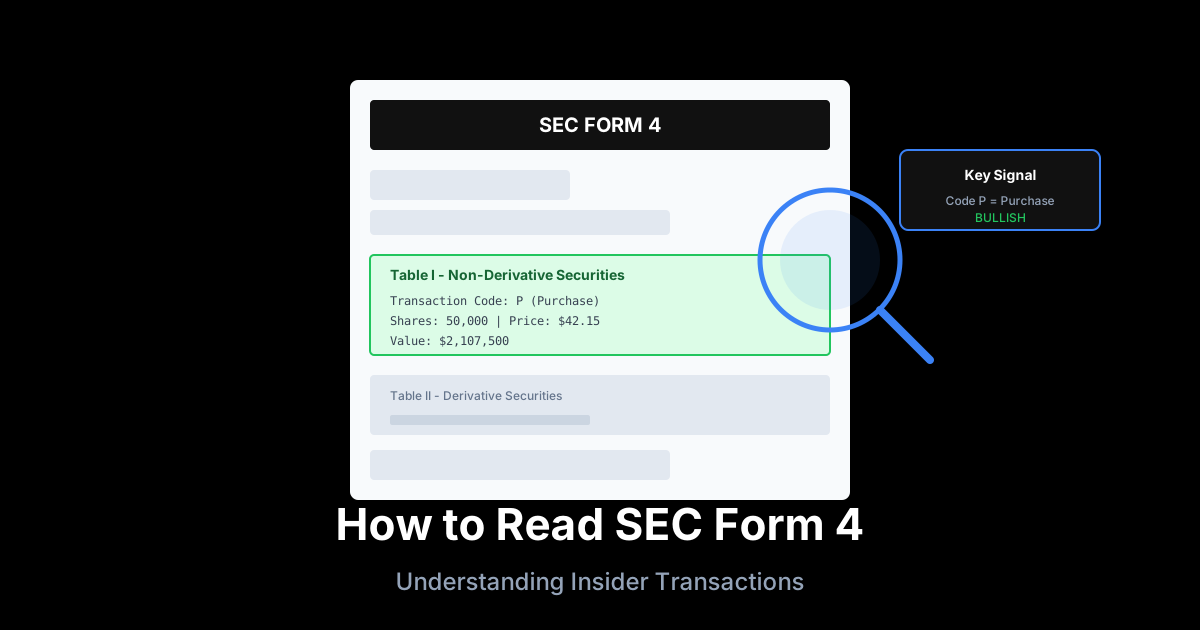
The most important section for most investors, showing:
Transaction Date: When the trade occurred
Transaction Code: A letter code indicating the type of transaction:
Number of Securities: How many shares were bought or sold
Price Per Share: The transaction price (or code like "A" for awards at no cost)
Amount Owned After Transaction: Total shares the insider owns after this trade
This section covers stock options, warrants, and other derivatives. Key information includes:
Understanding transaction codes is crucial for interpreting Form 4:
P (Purchase): Insiders buying with their own money is typically the strongest signal. They're putting personal capital at risk based on their belief in the company.
C (Conversion): Converting preferred shares to common stock can indicate confidence in long-term appreciation.
S (Sale): Can be bearish, but insiders sell for many legitimate reasons:
F (Tax Withholding): Usually not a discretionary sale. Often automatic when stock awards vest.
A (Award): Part of compensation packages, not a buy/sell decision
M (Exercise): Often followed by immediate sale (M+S), which is less meaningful than an open market purchase
G (Gift): Estate planning or charitable giving, not an investment decision
When multiple insiders sell within a short period, it may indicate:
If insiders sell large portions of their holdings after substantial price increases, they may be cashing in before a potential decline.
While insiders have blackout periods around earnings, pay attention to trades shortly after blackout periods end.
When executives use personal funds to buy stock, especially:
When insiders regularly purchase shares over time, it demonstrates ongoing confidence.
When several executives and directors buy simultaneously, it's a stronger signal than isolated purchases.
Not all transactions are equal. An open market purchase (P) is very different from a tax withholding sale (F).
One insider sale doesn't tell the whole story. Look for patterns across multiple insiders and timeframes.
Insiders often hold shares through trusts, family partnerships, or other entities. Check both direct and indirect ownership.
A sale of 10,000 shares sounds significant, but it's less meaningful if the insider still owns 10 million shares.
Compare the number of insiders buying vs. selling over a specific period. A ratio above 2:1 (buyers to sellers) is generally positive.
Monitor how insider ownership percentages change over time. Increasing ownership suggests confidence.
Insiders buying during market weakness often precedes positive performance.
Some insiders are consistent buyers, while others rarely purchase. Understand normal patterns for specific executives.
Let's decode a sample Form 4:
Transaction Date: 11/15/2024
Transaction Code: P (Purchase)
Number of Securities: 50,000 shares
Price Per Share: $45.20
Amount Owned After: 250,000 shares
Analysis:
Form 4 must be filed within two business days, but markets move quickly. The information is public but not real-time.
Form 4 shows transactions but doesn't explain motivations. Personal financial needs may drive selling even at healthy companies.
Even informed insiders can be wrong. Insider buying doesn't guarantee positive returns.
Reading SEC Form 4 filings is a valuable skill for serious investors. By understanding transaction codes, ownership structures, and meaningful patterns, you can gain insights into how company insiders view their own stock.
Remember to:
Master this skill, and you'll have an edge in understanding the "smart money" moves in the market.
Track insider transactions with ease. Our platform automatically analyzes Form 4 filings and highlights meaningful trading patterns, saving you hours of research time.