Ready to Track Insider Trading?
Join thousands of investors using InsiderTradeFlow to follow executive trades in real-time.
Join thousands of investors using InsiderTradeFlow to follow executive trades in real-time.
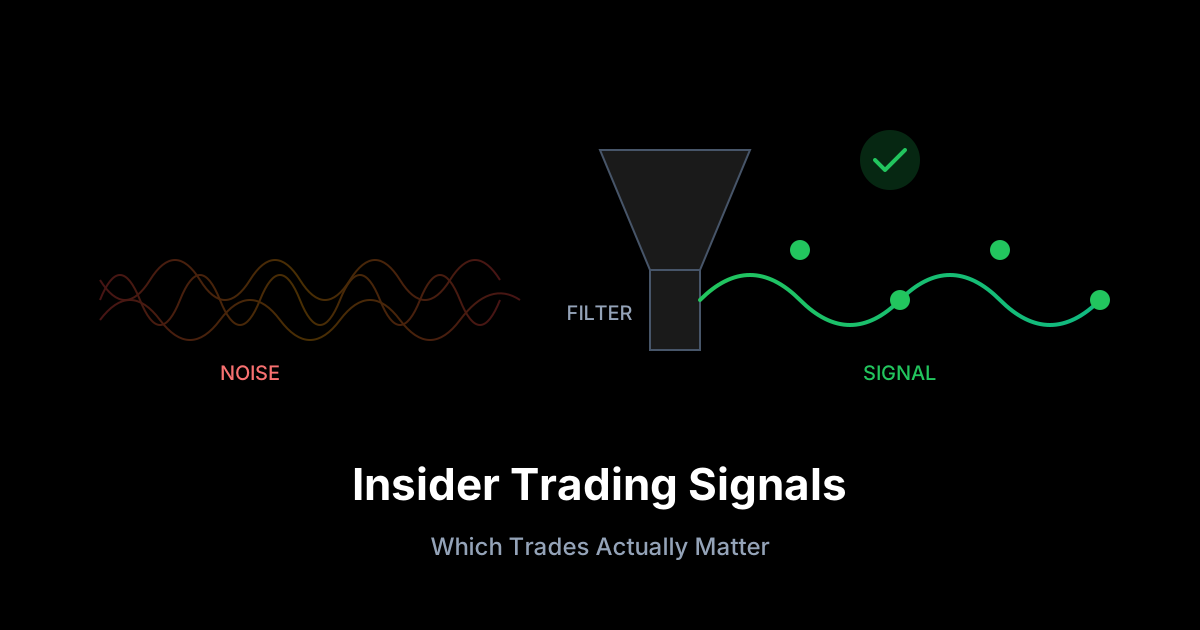
Every day, thousands of SEC Form 4 filings flood the market. Corporate insiders report everything from multi-million dollar stock purchases to routine compensation grants. But here's the problem: most of these transactions tell you nothing useful about a stock's prospects.
The key to leveraging insider data isn't volume - it's filtering. This guide will teach you how to separate the signal from the noise and identify the insider transactions that actually predict stock performance.
Before we discuss what matters, let's understand why most insider activity is meaningless for investment decisions.
On any given day:
Of that 10%, roughly half are pre-planned 10b5-1 transactions that execute automatically regardless of the insider's current sentiment.
Bottom line: Perhaps 5% of daily filings contain actionable investment signals.
Open Market Purchase (Code P)
This is the gold standard. When an insider files a Form 4 with transaction code "P," they've used personal funds to buy company stock on the open market, just like any other investor.
Why it matters:
Signal strength factors:
Open Market Sale (Code S)
Insider sales are notoriously difficult to interpret. Insiders sell for many reasons:
When sales become meaningful:
Most sales should be viewed as neutral until you have additional context.
Conversion/Exercise (Code M)
Option exercises are mixed signals. The exercise itself is often routine (options approaching expiration), but what happens next matters:
Award/Grant (Code A)
Stock grants and awards are compensation, not investment decisions. The insider didn't choose to acquire these shares - they were part of their pay package.
Exception: Watch for new executives receiving unusually large grants, which may indicate strong confidence from the board.
Tax Withholding (Code F)
When stock vests, companies often automatically sell shares to cover tax obligations. This is mechanical, not discretionary.
Always filter out Code F transactions - they tell you nothing about insider sentiment.
Gift (Code G)
Stock gifts are typically estate planning or charitable donations. The insider isn't selling because they're bearish - they're managing their personal finances.
Individual insider transactions have moderate predictive value. Cluster activity - multiple insiders acting in the same direction within a short period - dramatically increases signal strength.
Research consistently shows that cluster buying is the most reliable insider signal:
| Number of Buyers (90 days) | Historical Outperformance |
|---|---|
| 1 insider | +3-5% vs. market |
| 2 insiders | +5-8% vs. market |
| 3+ insiders | +8-15% vs. market |
Why clusters matter:
Strong Cluster Indicators:
Weak Cluster Indicators:
While single insider sales are usually noise, cluster selling deserves attention:
Important: Even cluster selling should be investigated, not automatically treated as a sell signal. Coordinated selling after a big run-up may simply be profit-taking.
The timing of insider transactions adds crucial context.
Insiders face blackout periods around earnings announcements (typically 2 weeks before through 2 days after). Buying immediately after blackout ends suggests:
Insiders purchasing during stock declines or market selloffs is particularly meaningful:
Be cautious about buying just before:
While legal if no MNPI is involved, the timing raises questions and may reflect information asymmetry.
Not all insiders have equal insight into company prospects.
CEO: Highest signal value. Complete visibility into operations, strategy, and financials.
CFO: Very high signal value. Deep understanding of financial health, cash flow, and forward projections.
COO: High signal value. Operational insight into execution and efficiency.
Other Officers: Moderate signal value. Specialized knowledge of their functional area.
Lead Director/Chairman: High signal value if independent. Broad strategic view.
Committee Chairs (Audit, Compensation): Moderate to high signal value. Specific expertise areas.
Independent Directors: Moderate signal value. Less day-to-day visibility than executives.
Activist Investors: High signal value. Professional investors with strong views.
Passive Institutional Owners: Low signal value. Often mechanical rebalancing.
Founders/Family: Moderate signal value. May have concentrated positions for historical reasons.
Raw dollar amounts can be misleading. Context is essential.
Meaningful purchase indicators:
Less meaningful:
Purchase Conviction = (New Shares / Previous Holdings) × 100

Example:
- Previous holdings: 100,000 shares
- New purchase: 25,000 shares
- Conviction score: 25% increase (meaningful)
Insiders who have only received grants but never purchased with personal funds are especially notable when they make their first open-market buy:
Rule 10b5-1 trading plans allow insiders to set up predetermined trades that execute automatically. Understanding these plans is crucial for signal analysis.
Purchases under 10b5-1: Rare, but may indicate long-term confidence when setting up the plan.
Sales under 10b5-1: Generally meaningless for short-term signals. The decision was made months ago under different conditions.
Check Form 4 footnotes for language like:
Filter out most 10b5-1 sales when analyzing insider sentiment.
Recent SEC amendments require:
These changes make 10b5-1 plans more legitimate but don't change their limited value for trading signals.
We recommend a systematic filtering process:
Step 1: Transaction Type Filter
Step 2: Dollar Amount Filter
Step 3: 10b5-1 Filter
Step 4: Role Weight
Step 5: Cluster Detection
Base Score:
- Code P purchase: +10 points
- Code S sale: -2 points (context-dependent)

Multipliers:
- CEO/CFO: × 2.0
- Other Officer: × 1.5
- Director: × 1.0
- 10% Owner: × 1.2

Adjustments:
- Dollar amount > $500K: +5 points
- Position increase > 25%: +5 points
- Cluster (2+ buyers): +10 points
- During stock decline: +5 points
- 10b5-1 plan: -8 points (for sales)
Before acting on any insider signal:
6-12 months is typical. Academic research shows insider buying signals are most predictive over this timeframe. Expecting immediate results often leads to frustration - insiders have long-term perspectives.
Yes, small and mid-cap stocks show stronger effects. These companies have less analyst coverage, so insider knowledge provides more informational edge. Large caps are more efficiently priced.
No, use it as one input. By the time you see Form 4, 2 business days have passed and the stock may have moved. More importantly, your risk tolerance and portfolio context differ from the insider's.
Concentrated ownership or low compensation in stock. Some executives already own substantial positions and don't need to buy more. Others receive most compensation in cash. Absence of buying isn't necessarily bearish.
Look for patterns and context. Regular, small sales on predictable schedules = diversification. Sudden large sales, especially from multiple insiders or before bad news = potentially bearish. Also check if sales are under 10b5-1 plans.
Less directly than stock transactions. Option exercises (Code M) are often driven by expiration dates, not sentiment. However, exercise-and-hold (vs. exercise-and-sell) can indicate confidence in continued appreciation.
InsiderTradeFlow's Executive Conviction Score automatically filters noise and ranks insider transactions by signal quality. Our algorithm combines transaction type, role weight, cluster detection, and timing analysis to surface the buys that matter. Try it free for 14 days.