Ready to Track Insider Trading?
Join thousands of investors using InsiderTradeFlow to follow executive trades in real-time.
Join thousands of investors using InsiderTradeFlow to follow executive trades in real-time.
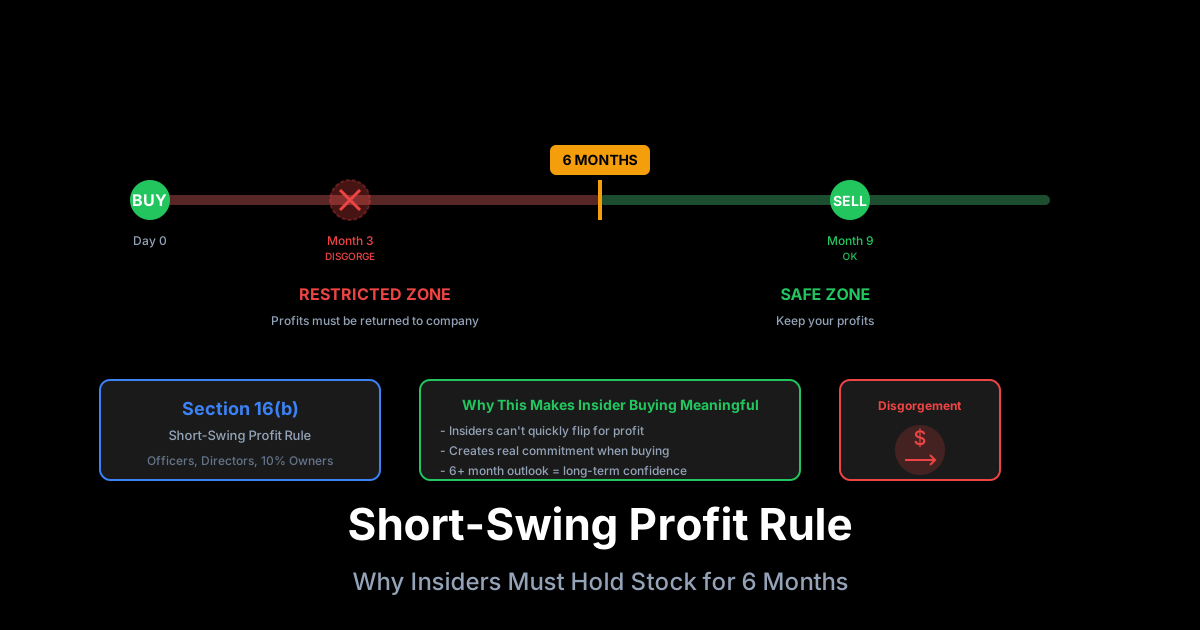
When a CEO buys $500,000 worth of company stock, they're making a commitment most retail investors don't face: they effectively cannot sell for a profit for six months. This constraint, known as the short-swing profit rule, is one of the reasons insider purchases are such powerful investment signals.
Understanding Section 16 and the short-swing rule helps you appreciate why insider buying carries weight and how these legal restrictions shape insider trading behavior.
Section 16 of the Securities Exchange Act of 1934 governs insider trading disclosure and profit recovery. It has three main components:
Section 16(a): Reporting requirements - insiders must file Forms 3, 4, and 5 disclosing ownership and transactions.
Section 16(b): Short-swing profit rule - insiders must return profits from matching purchases and sales within 6 months.
Section 16(c): Prohibition on short sales - insiders cannot sell company stock short.
This article focuses on Section 16(b), the short-swing profit rule that creates holding period implications.
Section 16 applies to three categories:
1. Officers
2. Directors
3. 10% Beneficial Owners
Officers and Directors: Section 16 applies from appointment/election until resignation/removal.
10% Owners: Section 16 applies while ownership exceeds 10%. If ownership drops below 10%, Section 16 status ends.
Important: There's a "grace period" - transactions made before becoming a 10% owner aren't subject to Section 16(b).
Section 16(b) states:
Any profit realized by a beneficial owner, director, or officer from any purchase and sale, or sale and purchase, of any equity security within any period of less than six months shall be recoverable by the issuer.
Translation: If an insider buys stock and sells it (or sells and then buys back) within 6 months, the company can recover any profit.
The SEC and courts use the most unfavorable matching method:
Scenario: An officer makes these transactions:
Matching logic:
The company can recover that $80,000 from the officer.
The rule is intentionally punitive:
Example:
Matching:
Even though the January lot lost money ($50 buy, $45 sell = $5 loss), the rule matches the profitable pair.
Section 16(b) is a strict liability rule:
If the mechanical matching produces a profit, it must be disgorged. Period.
The 6-month period is calculated precisely:
Example: A purchase on January 15 can be matched with sales through July 14. A sale on July 15 or later is outside the window.
When insiders buy, they effectively cannot:
This creates real constraints:
The short-swing rule is why insider purchases are such strong signals:
Without the rule: An insider could buy on Monday based on good news they know, and sell on Friday when the news becomes public.
With the rule: An insider who buys must hold for 6 months regardless of what happens. They're committing capital with meaningful risk.
This is why Code P (purchase) transactions are valuable signals - insiders aren't making quick bets; they're making 6-month+ commitments.
The company can sue the insider to recover short-swing profits. More commonly:
Section 16(b) is unusual - it can be enforced by shareholders:
This creates a cottage industry of Section 16(b) litigation.
Certain transactions are exempt from Section 16(b):
Compensation-related:
Structural:
The conditions are technical - many require board approval or other formalities. Errors in claiming exemptions are common sources of Section 16 violations.
For 10% owners (but not officers/directors), there's an important distinction:
Example: An investor owns 9% of a company. They buy 2% more (crossing to 11%). That purchase is exempt from 16(b) matching. Only subsequent purchases/sales while over 10% are subject to matching.
SEC Rule 16b-3 exempts many compensation transactions if:
This is why most stock grants (Code A) and standard option exercises don't trigger disgorgement - they're approved in advance.
The short-swing rule is one reason insiders establish 10b5-1 trading plans:
Because insiders can't sell for 6 months after buying:
When insiders sell, they must consider:
This complexity makes insider selling analysis trickier than buying analysis.
Despite the stakes, Section 16 violations are surprisingly common:
Late Form 4 filings: Most common violation - filings more than 2 days after transaction.
Failure to file Form 3: New insiders missing the 10-day deadline.
Short-swing profit violations: Often accidental, from complex matching.
Gifts not reported: Insiders forgetting to report stock gifts.
For reporting violations:
For short-swing violations:
Companies must disclose Section 16 violations in their annual proxy statements:
"Section 16(a) Beneficial Ownership Reporting Compliance"
This section lists any late filings or known violations. A long list of violations may indicate poor corporate governance.
When you see insider buying (Code P), remember:
This is fundamentally different from a retail investor who can buy today and sell tomorrow.
The short-swing rule also affects sell signal interpretation:
If an insider sold recently and is now buying:
If an insider is selling after a long holding period:
Sophisticated insiders often build positions gradually:
This creates a pattern of periodic buying over years - extremely bullish signal.
Yes. It covers purchase-then-sale AND sale-then-purchase. An insider who sells and buys back within 6 months also faces disgorgement on any "profit" from the buy at a lower price.
No disgorgement, but the rule still applies. If matching transactions produce no profit (or a loss), there's nothing to recover. But the transactions are still matched and analyzed.
Technically yes, but rarely done. Selling at a loss isn't prohibited, but insiders typically don't buy stock planning to sell it quickly at any price. The commitment to buy implies confidence.
10b5-1 plans don't exempt from Section 16(b). The short-swing rule still applies even to planned transactions. However, plans can be structured to avoid 6-month conflicts.
It's complicated. Option exercises may or may not count as "purchases" depending on how they're structured and approved. This is a common area of Section 16 litigation.
Each insider is analyzed separately. If CEO and CFO both buy, each has their own 6-month clock. Their purchases don't affect each other's short-swing calculations.
No, past transactions can still be matched. An executive who resigns is still subject to disgorgement for transactions made while they were an insider, even if the matching sale happens after departure.
Sometimes. Beneficial ownership rules may attribute family members' holdings to the insider. A spouse's transactions could potentially affect short-swing calculations.
The company keeps them. Disgorgement payments go to the company treasury, not to shareholders or the SEC. This is "profit recovery" for the corporation.
Look at recent filings. If an insider sold in the past 6 months and is now buying (or vice versa), there may be short-swing implications. The Form 4 footnotes sometimes disclose these issues.
The short-swing profit rule makes insider purchases more meaningful - when insiders buy, they're committing for at least 6 months. InsiderTradeFlow tracks all insider transactions and flags significant patterns, helping you focus on the committed buying that signals genuine conviction. Our Executive Conviction Score factors in holding behavior and transaction timing. Start your free trial today.