Ready to Track Insider Trading?
Join thousands of investors using InsiderTradeFlow to follow executive trades in real-time.
Join thousands of investors using InsiderTradeFlow to follow executive trades in real-time.
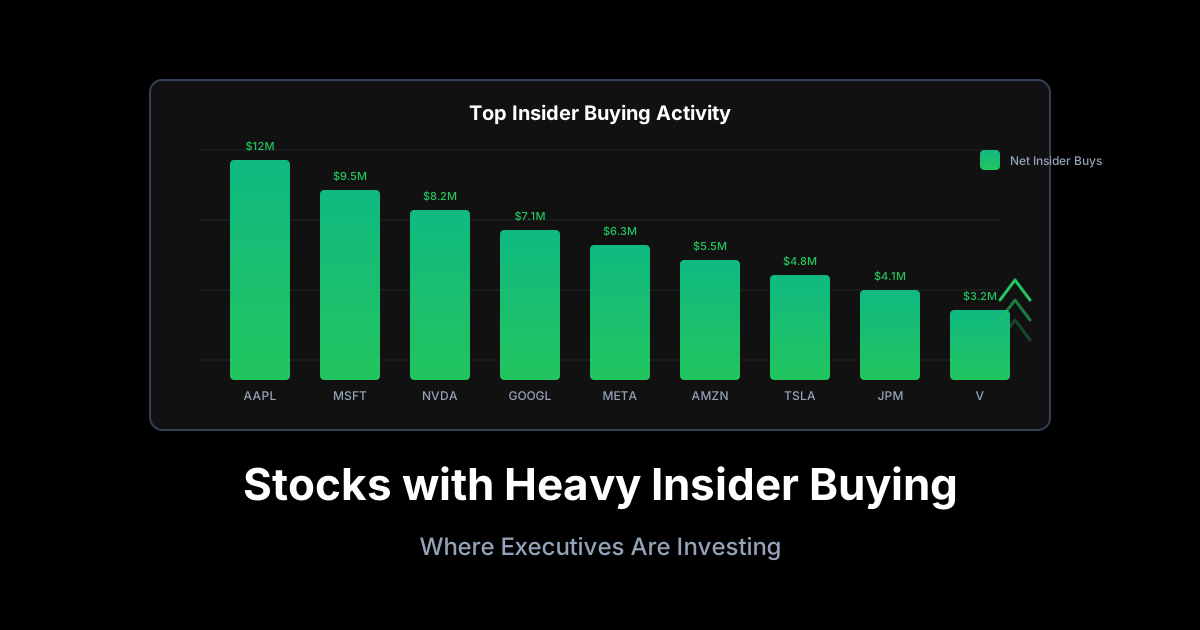
Insider buying is one of the strongest signals in the stock market. When executives and directors use their own money to purchase shares, they're putting their capital where their conviction is. Let's explore why insider buying matters and look at trends shaping the market in 2025.
Corporate insiders have several advantages over retail investors:
Executives know their company's pipeline, upcoming products, and strategic initiatives before the market does.
Unlike analyst recommendations or media hype, insider purchases represent real money at risk.
Insiders typically buy based on fundamental analysis and long-term outlook, not short-term trading opportunities.
Several factors indicate significant insider activity:
When 3+ insiders buy within a 90-day period, it suggests widespread confidence across management.
Purchases exceeding $100,000 demonstrate meaningful commitment, especially from executives with moderate net worth.
When insiders increase their ownership by 25% or more, it signals strong conviction.
Chief Executive Officers making large purchases carry extra weight due to their comprehensive company knowledge.
Technology, healthcare, and financial services sectors have historically shown the most predictive insider buying patterns.
Insider buying during market corrections or sector-specific downturns often precedes strong recoveries.
Growth companies with insider buying can be especially interesting, as management signals confidence in the growth story.
Look for companies where multiple insiders are buying within a concentrated timeframe.
Focus on "P" (Purchase) transaction codes on SEC Form 4, which indicate open-market buying.
Compare purchase amounts to the insider's existing holdings and total compensation.
Insider purchases during periods of stock weakness or after earnings disappointments can be especially telling.
One insider buying while others sell may not be as significant.
Purchases under $10,000 may be token gestures rather than strong conviction plays.
Don't confuse stock awards (transaction code "A") with actual purchases.
Insider buying at companies with deteriorating balance sheets requires extra scrutiny.
Use both signals together. When insider buying aligns with positive analyst sentiment, the conviction level increases.
Studies have shown that portfolios built on insider buying signals have historically outperformed:
Multiple studies demonstrate that insider purchases, especially by CEOs and directors, predict positive abnormal returns.
Insider buying shows strongest predictive power over 6-12 month periods rather than short-term trades.
Insider buying in smaller companies tends to be more predictive than in mega-cap stocks.
Don't rely solely on insider buying. Check:
Insider buying is more meaningful when companies trade at:
Start with small positions and scale based on:
Insiders often have blackout periods around earnings. Buying immediately after suggests confidence in upcoming quarters.
New management teams buying stock can signal transformation optimism.
Insider purchases during broad market selloffs demonstrate conviction when others are fearful.
Industry-wide declines followed by insider buying can mark sector bottoms.
Form 4 filings occur within 2 business days, creating a slight information lag.
Unlike insiders with complex tax planning, retail investors should consider:
Modern platforms provide instant notifications when insiders file Form 4, eliminating manual research.
Advanced analytics can identify statistically significant insider buying patterns.
Review how past insider purchases at specific companies or sectors performed.
Different countries have varying disclosure requirements:
When following international insider buying, account for currency fluctuations.
Insider buying + technical breakouts = high-probability setups
Heavy insider buying in high short-interest stocks can trigger short squeezes
Insider buying before earnings acceleration often precedes significant moves
Companies with insider buying and dividend raises demonstrate capital confidence
Even informed insiders make mistakes about their company's prospects.
Unexpected economic events can override company-specific insider knowledge.
Small-cap stocks with insider buying may have limited trading volume.
The market may have already moved by the time Form 4 becomes public.
Create a systematic approach:
Insider buying remains one of the most reliable signals in equity markets. By focusing on significant purchases, multiple buyers, and combining this data with fundamental analysis, investors can identify compelling opportunities.
Remember these key principles:
The most successful investors use insider trading data as one tool in a comprehensive research process. When insiders buy, they're telling you something important - make sure you're listening.
Want to track insider buying in real-time? Our platform monitors 10M+ transactions and alerts you when clusters of insider buying appear in sectors you follow.