Ready to Track Insider Trading?
Join thousands of investors using InsiderTradeFlow to follow executive trades in real-time.
Join thousands of investors using InsiderTradeFlow to follow executive trades in real-time.
Insider trading is one of the most misunderstood concepts in the financial world. While the term often carries negative connotations, not all insider trading is illegal. In fact, corporate insiders legally buy and sell stock in their own companies every day, and these transactions can provide valuable insights for retail investors.
Insider trading refers to the buying or selling of a company's stock by someone who has access to material, non-public information about that company. This typically includes corporate executives, directors, and employees who have access to confidential business information.
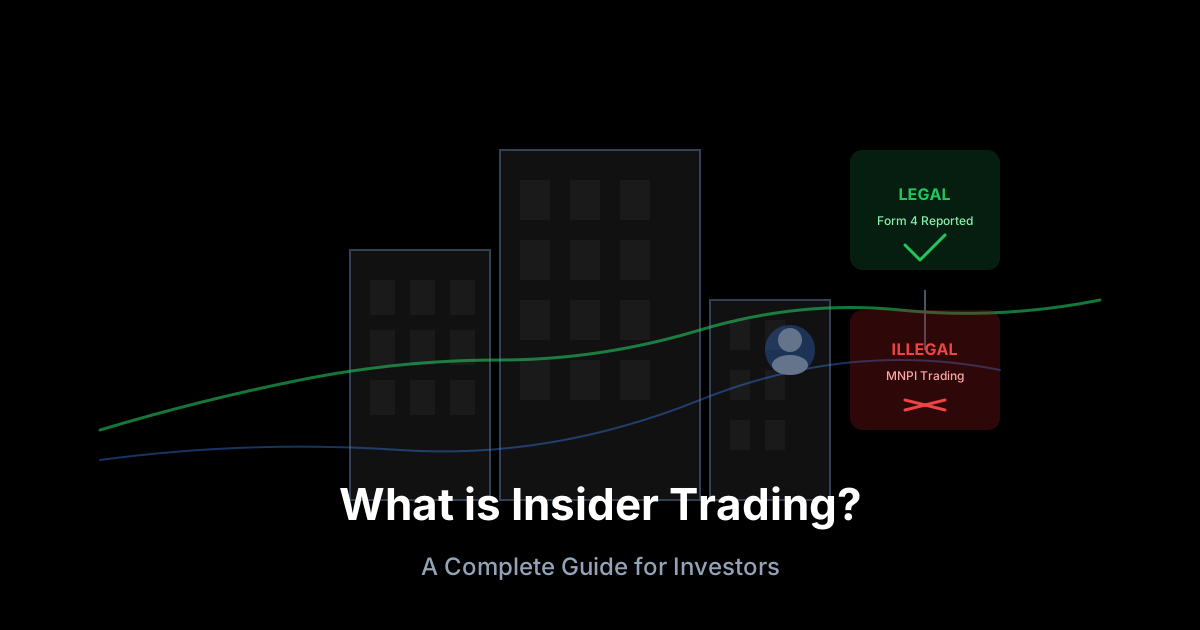
Legal Insider Trading occurs when corporate insiders buy or sell stock in their own companies but report these transactions to the Securities and Exchange Commission (SEC). These transactions must be disclosed through Form 4 filings, which become public information.
Illegal Insider Trading happens when someone trades based on material, non-public information, violating their duty to keep that information confidential. This is what leads to SEC investigations and criminal charges.
Following legal insider transactions can be valuable for several reasons:
When executives buy shares of their own company, it often signals their confidence in the company's future prospects. They have access to information about upcoming products, financial performance, and strategic initiatives.
Conversely, when multiple insiders sell large amounts of stock, it may indicate concerns about the company's future performance. While insiders sell for many legitimate reasons (diversification, tax planning, personal expenses), patterns of selling can be noteworthy.
Corporate insiders have a deep understanding of their company's competitive position, market opportunities, and potential challenges. Their trading decisions reflect this knowledge.
The SEC requires insiders to report their transactions within two business days through Form 4 filings. This includes:
When analyzing insider trading data, investors should consider:
Larger transactions typically carry more significance than small trades. A $10 million purchase by a CEO is more meaningful than a $10,000 transaction.
When several insiders at the same company are buying or selling simultaneously, it often represents a stronger signal than an isolated transaction.
Trades made during blackout periods or around earnings announcements should be scrutinized carefully, though most are properly pre-cleared by legal counsel.
Smart investors use insider trading data as one piece of their research process:
False. Legal insider trading happens thousands of times daily and is properly disclosed to the SEC.
Not necessarily. While insider buying is generally bullish, it doesn't guarantee positive returns. Insiders can be wrong about their company's prospects.
By the time Form 4 filings become public, days have passed since the actual transaction. The market may have already moved, making exact replication challenging.
Several platforms provide access to insider trading data:
Understanding insider trading – both legal and illegal – is crucial for informed investing. Legal insider transactions provide a window into the minds of those who know their companies best. By tracking these transactions alongside other fundamental and technical analysis, investors can gain valuable insights for their investment decisions.
Remember that insider trading data should be one tool among many in your investment toolkit. Always conduct thorough research and consider consulting with a financial advisor before making investment decisions.
Looking to track insider trading activity in real-time? Our platform provides comprehensive SEC Form 4 data with advanced filtering and alerts to help you follow the smart money.